14 min read
Investing in Costa del Sol property (2026): yields, rental rules and tax
The Costa del Sol closed 2025 at record prices, with foreign buyers taking roughly a third of purchases in Malaga province. This guide sets out the fundamentals an investor should weigh in 2026: the yield after costs, the holiday-let position after the national registry was struck down, how rental income and a non-let second home are taxed for non-residents, the annual running costs, and the wealth taxes that bite at the top of the market.

Carlos
Architect and Founder, DIEZ
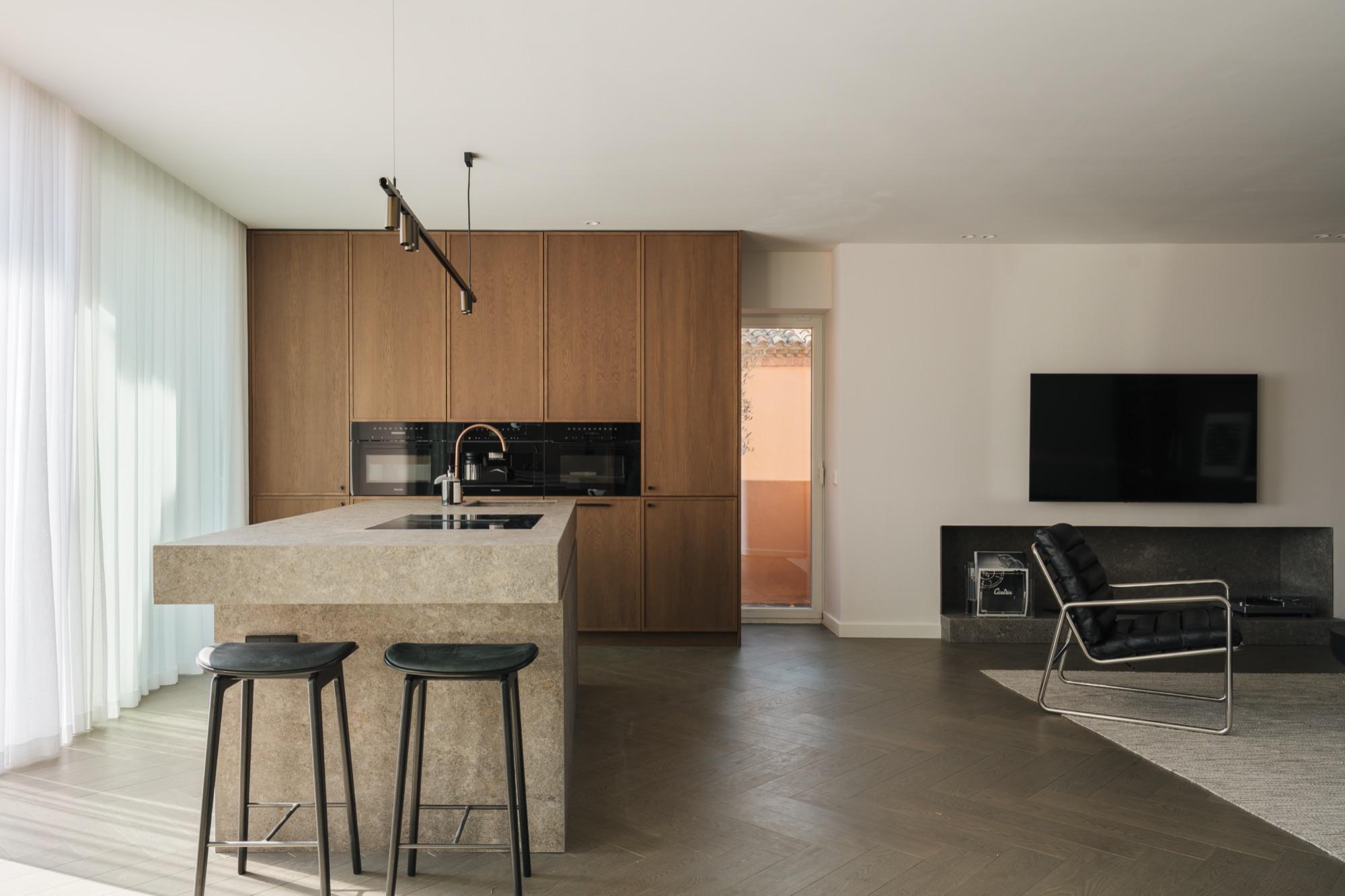
Most investment pitches for the Costa del Sol lead with the gross yield and the view. We prefer to lead with the deductions, because the deductions are where a decent-looking headline number quietly becomes an ordinary one. What follows is the investor's view of the coast in 2026: the official market data, the licensing you cannot skip, the taxes a non-resident owner actually pays, and the running costs that sit underneath the whole thing. Figures here are drawn from official sources and are correct to the best of our reading in mid-2026; several rules changed recently, and one central piece of holiday-let regulation was struck down by the courts in May 2026, so confirm each one for your own circumstances before you commit.
Market fundamentals
The national picture is one of sustained price growth. The INE house price index (Indice de Precios de Vivienda) recorded an annual rise of 12.9% in the fourth quarter of 2025, with new-build up 11.2% and second-hand up 13.1%, and a quarterly rise of 1.8%. That is one of the strongest annual closes since 2007. Price growth of this order is a demand signal, not a promise; it also means entry prices are high and the margin for error on any single purchase is thinner than it was five years ago.
Malaga province is at the sharper end of that demand. The Colegio de Registradores' Estadistica Registral Inmobiliaria puts Malaga among the highest average prices in Spain, in the region of 3,100 EUR per square metre in 2025. Foreign buyers accounted for roughly 14% of national purchases; in Malaga province the foreign share reached around 32.8%, the second-highest of any province after Alicante. Confirm the precise latest-quarter figures against the source before relying on them, as the registry updates these each quarter.
Roughly a third of purchases in Malaga province are made by foreign buyers. That is the demand story. It is not, on its own, an investment case.
For a foreign buyer, that concentration cuts both ways. It supports resale liquidity in the segments international buyers want, and it means you are often competing with other overseas money rather than with local wage-linked demand. The honest reading is that the coast's fundamentals are strong on demand and price momentum, and that this is precisely why disciplined pricing and a clear exit plan matter more here than in a flat market.
What the yield really is
Gross yield is annual rent divided by purchase price. It is the number you will be shown. Net yield is what remains after the costs and taxes set out in the rest of this guide, and it is the only number worth planning around. We do not publish a headline yield figure for the coast, because a single number would be misleading across such different products, locations and letting strategies. Instead, build your own from the components below.
The gap between gross and net is driven by the items in this list. Each one is treated in detail further down:
- Non-resident income tax on the rent: 19% of net for EU/EEA residents, or 24% of gross for everyone else
- IBI (municipal property tax), the rubbish collection fee and, in most developments, community fees
- Holiday-let compliance and operating costs where you let short-term, plus platform and management fees
- Void periods, which are real and seasonal on a leisure coast
- Maintenance, insurance and the depreciation of fittings over time
A practical consequence: the tax treatment alone can move net yield materially depending on your residence. An EU/EEA-resident landlord deducting costs against a 19% rate keeps considerably more of the rent than a non-EU landlord paying 24% on the gross figure. Model your own position before you assume a coast-wide average applies to you.
Holiday-let licensing: what actually applies in 2026
If you intend to let short-term to tourists, the position changed materially in 2026. Until mid-2025 the working assumption was two cumulative layers: the Andalucian regional regime and a newer national registration number. In May 2026 the national number was annulled by the Tribunal Supremo. The regional Andalucian regime is now the operative licensing layer, and it is the one you must satisfy.
The Andalucian VFT regime
Viviendas con fines turisticos (VFT) are regulated by Decreto 28/2016, de 2 de febrero, of the Junta de Andalucia. Operating one requires a declaracion responsable and entry in the Registro de Turismo de Andalucia (RTA), which issues a VFT registration code that must appear in all advertising. This is a declaracion responsable regime rather than a discretionary licence: you declare that the property meets the requirements and may begin operating, but the obligation to actually meet them is yours, and inspection follows.
Decreto 31/2024, de 29 de enero, tightened those physical requirements. The main points now include:
- A minimum of 14 square metres of built area of main use per guest place
- A minimum of 25 square metres total built area, or as local planning determines
- Maximum capacity of 15 guest places for a whole-property let, and 6 for room lets
- Two bathrooms required above 5 guest places, and three above 8
- Cooling required in bedrooms and living rooms if you operate in May to August, and heating if you operate in December to March
There is a further point specific to communities of owners: Andalucian and national rules increasingly allow a comunidad de propietarios to restrict or condition tourist lets in its statutes. Before buying with a holiday-let plan, read the community statutes and check whether tourist letting is already limited. This is one of the most common reasons a letting strategy fails after completion.
The national registration number was struck down
Real Decreto 1312/2024, de 23 de diciembre, had created a single rental registry (Registro Unico de Arrendamientos) housed in the property registries, together with a Ventanilla Unica Digital de Arrendamientos, and required each short-term-let unit to obtain a national numero de registro. On 19 May 2026 the Tribunal Supremo, in judgment 620/2026, annulled the provisions creating that mandatory registration number, holding that the State lacked competence to establish a national registry overlapping the regional tourism registries that already operate in every autonomous community.
What the Court preserved, and what it removed, matters for how you list a property. The mandatory national numero de registro is no longer required. The Ventanilla Unica Digital and the obligations on online platforms to transmit data survive, because the Court accepted the State's competence there. In practical terms, the valid identifier before platforms and authorities is now the regional VFT code from the Registro de Turismo de Andalucia, not a separate national number.
The national registration number was annulled in May 2026. In Andalucia the operative identifier is the regional VFT code, not a separate national one.
Because this is recent and the regulatory response is still forming, treat the exact procedure as unsettled. Confirm the current position with the Junta de Andalucia and, where relevant, the Ministerio de Vivienda before you list, rather than relying on any summary written before the May 2026 judgment, including guidance that still describes a mandatory national number as being in force.
Tax on rental income for non-residents
Rental income earned by a non-resident from a Spanish property is taxed under the Impuesto sobre la Renta de no Residentes (IRNR), governed by the texto refundido approved by Real Decreto Legislativo 5/2004. The single most important distinction is by your country of residence.
| Landlord's residence | Rate | Tax base | Deductible costs |
|---|---|---|---|
| EU / EEA (incl. Iceland, Norway, Liechtenstein) | 19% | Net income | Yes: IBI, community fees, insurance, repairs, mortgage interest, building depreciation |
| Any other country (non-EU) | 24% | Gross income | No deductions permitted |
For an EU/EEA-resident individual, the deductible expenses are those directly related to and inseparable from the Spanish rental activity: IBI, community fees, insurance, conservation and repair costs, mortgage interest, and depreciation (amortizacion) of the building at 3% on the construction value, excluding the land. That combination often reduces the effective burden well below the headline 19%. A non-EU resident, by contrast, pays 24% on the gross rent with nothing deducted, which is a materially heavier load on the same property.
There is an evolving point to watch. A 2025 court development is reported to extend expense deductibility to non-EU residents, on the reasoning that denying it discriminates against third-country landlords. This is not yet settled practice. Treat it as a live question, take advice, and do not price a non-EU purchase on the assumption that deductions will apply.
Filing: modelo 210
Rental income is declared on modelo 210. Historically this was quarterly, filed within the first 20 calendar days of April, July, October and January for the preceding quarter's income. For income accrued from 2024 onwards, taxpayers may instead group a full year's rental income into a single annual return, which is simpler for a steadily let property. Choose the periodicity that fits, and keep the invoices that support any deductions, because the burden of proof sits with you.
Imputed income on a second home you do not let
A point that surprises many buyers: even if you never let the property and simply keep it for your own use, a non-resident owner of urban property in Spain must declare an imputed income (renta imputada) on modelo 210. The state treats the availability of the property as a notional benefit and taxes it.
The imputed base is 1.1% of the cadastral value where that value was revised through a general collective valuation in force in the tax period or within the previous 10 tax periods, or 2% otherwise. No expenses are deductible against it. The resulting base is then taxed at 19% for EU/EEA residents or 24% for others. The reduced 1.1% rate, which applies to municipalities with cadastral values revised since 2012, was extended for 2026 by Real Decreto-ley 2/2026, de 3 de febrero; without that extension the applicable percentage would have reverted to 2%. Confirm the current-year wording on the live AEAT page, since it may lag the extension.
In practice the sums are modest on a typical apartment, but they are annual, they are owed whether or not you visit, and non-filing accrues interest and penalties. Budget for it and file it.
Annual running costs
Three recurring costs attach to ownership regardless of whether you let. None is optional.
| Cost | What it is | Set by | Basis |
|---|---|---|---|
| IBI | Municipal property tax | Each ayuntamiento (rate varies by municipality) | Cadastral value |
| Tasa de basuras | Rubbish and waste collection fee | Municipality | Municipal tariff |
| Comunidad de propietarios | Shared costs of the development | The community's budget and your quota | Your participation coefficient |
IBI is levied by the town hall on the cadastral value, which is managed by the Direccion General del Catastro, with the rate set by each municipality under the local finance law (RDL 2/2004). The rubbish fee is a separate municipal charge. Community fees, where the property sits in a development with shared pools, gardens, security or lifts, can be significant on the coast and are worth scrutinising: a resort-style development with extensive amenities carries a heavier community budget than a modest block, and that difference lands on your net yield every month.
Wealth and solidarity tax at the top of the market
For buyers at the upper end, two further taxes matter, and they interact in a way that is specific to Andalucia.
Wealth tax and the Andalucian bonificacion
The state Impuesto sobre el Patrimonio, under Ley 19/1991, has a general exempt minimum of 700,000 EUR per taxpayer, plus up to 300,000 EUR of exemption for a main residence. Andalucia applies a 100% bonificacion under Decreto-ley 7/2022, so in the region the wealth tax is effectively neutralised. Non-residents are liable only on Spanish-situated assets (obligacion real), and the Andalucian 100% bonificacion applies to them as well.
The temporary solidarity tax (ITSGF)
Above that sits the state Impuesto Temporal de Solidaridad de las Grandes Fortunas, created by Ley 38/2022 and kept in force for later years (its effects were extended indefinitely by Real Decreto-ley 8/2023), so it applies for 2026. It taxes net wealth above 3,000,000 EUR at 1.7% on the band from 3M to 5.347M EUR, 2.1% from 5.347M to 10.696M EUR, and 3.5% above 10.696M EUR. A 700,000 EUR exempt minimum applies, and following a TEAC resolution of 18 December 2025 that minimum extends to non-residents taxed on their Spanish assets. Because wealth tax actually paid is deductible against the solidarity tax, Andalucia adjusts its 100% wealth-tax bonificacion above 3M EUR so that the revenue stays with the region rather than flowing to the state. The upshot for a high-value buyer: below 3M EUR of Spanish net wealth the position is effectively neutral in Andalucia, and above it the solidarity tax bites at the rates shown.
Below 3M EUR of Spanish net wealth, Andalucia is effectively neutral. Above it, the solidarity tax is where the real cost sits.
Transaction taxes, for context
Two transaction taxes bracket the deal. On a resale purchase in Andalucia the buyer pays Impuesto de Transmisiones Patrimoniales (ITP) at a general rate of 7%, made permanent by Ley 5/2021 after a transitional decree unified the previous progressive 8/9/10% scale. Reduced rates apply to protected cases: 6% for a main home up to 150,000 EUR; 3.5% for a main home up to 150,000 EUR bought by someone under 35, a victim of domestic violence or terrorism, or a buyer in a depopulation-affected municipality; and 3.5% for a main home up to 250,000 EUR where the buyer has a disability of 33% or more or holds large-family status. Documented legal acts (AJD) carry a general 1.2% rate. New-build purchases follow a different route (VAT at 10% plus AJD) rather than ITP, and are outside the scope of this resale-focused note.
On the way out, the seller pays the municipal plusvalia (IIVTNU). Since Real Decreto-ley 26/2021, which adapted the tax to Constitutional Court case law in STC 182/2021, the taxpayer may choose the lower of two bases: the objective method (cadastral land value multiplied by an annual coefficient set by the municipality within legal maxima) or the real method (actual gain, being transfer value minus acquisition value, apportioned by the land's share of cadastral value). Where there is no real increase in value, no plusvalia is due. These rules remain in force in 2026.
What changed: the golden visa is gone
The single biggest narrative change against older investment guides: the residency-by-investment golden visa no longer exists. The 500,000 EUR real-estate route, set out in articles 63 to 67 of Ley 14/2013, was abolished by the disposicion derogatoria of Ley Organica 1/2025, de 2 de enero, de medidas en materia de eficiencia del Servicio Publico de Justicia. It took effect on 3 April 2025, three months after publication in the BOE.
Transitional provisions preserve the position of those already in the system: applications completed before that date, and existing permits together with their renewals, are protected. But for anyone buying now, property purchase no longer opens a residency route. If residency is part of your objective, that objective must be pursued through other, unrelated channels, and a property purchase should be justified on its investment and lifestyle merits alone. We think that is a healthier basis for a decision in any case.
The DIEZ view
The Costa del Sol in 2026 is a strong-demand, high-price market with a heavier and more clearly enforced regulatory frame than it had even two years ago, even after the national short-let registry was struck down. That is not a reason to stay away; it is a reason to underwrite carefully. Build your yield from the deductions upward, confirm the Andalucian VFT position before you count on any letting income, and price the tax to your own residence rather than to a brochure average. Where a purchase only works on an optimistic gross yield, or only works if a letting position comes through, or only ever worked because of a residency visa that no longer exists, that is usually a purchase to walk away from.
Common questions
Do I pay Spanish tax if I own a Costa del Sol home but never let it?
Yes. A non-resident owner of urban property for own use must declare imputed income (renta imputada) on modelo 210, calculated as 1.1% or 2% of the cadastral value depending on when that value was last revised, then taxed at 19% (EU/EEA) or 24% (non-EU). No expenses are deductible against it, and it is owed annually whether or not you visit.
Do I still need a national short-term-let registration number in 2026?
No. The mandatory national numero de registro created by RD 1312/2024 was annulled by the Tribunal Supremo on 19 May 2026, because the State lacked competence to run a registry overlapping the regional tourism registries. In Andalucia the operative identifier is the regional VFT code from the Registro de Turismo de Andalucia, which must appear in your advertising. The national Ventanilla Unica Digital and the platform data-transmission duties were preserved, so confirm the current position before you list.
How much tax will I pay on rental income as a non-resident?
It depends on your residence. EU/EEA residents are taxed at 19% on net income and may deduct costs including IBI, community fees, insurance, repairs, mortgage interest and building depreciation. Residents of other countries are taxed at 24% on gross income with no deductions, though a 2025 court development may extend deductibility to non-EU residents in future. Take advice before relying on it.
Can I still get Spanish residency by buying property?
No. The golden visa residency-by-investment route, including the 500,000 EUR real-estate option under Ley 14/2013, was abolished by Ley Organica 1/2025 with effect from 3 April 2025. Existing permits and their renewals, and applications completed before that date, are preserved, but new purchases no longer open a residency route.
What running costs should I budget for each year?
Three recurring charges: IBI (municipal property tax on the cadastral value, rate set by the town hall), the tasa de basuras (rubbish collection fee), and, in most developments, community fees. Community fees vary widely and can be substantial in resort-style schemes with pools, gardens and security, so check the community budget before buying.
Will I pay wealth tax on a high-value Costa del Sol purchase?
Andalucia applies a 100% bonificacion on the state wealth tax, so below 3M EUR of Spanish net wealth the position is effectively neutral, including for non-residents on their Spanish assets. Above 3M EUR the state solidarity tax (ITSGF) applies at 1.7%, 2.1% and 3.5% across its bands, and Andalucia adjusts its wealth-tax relief at that level so the revenue stays regional.
Sources
Every figure in this guide is drawn from an official source. Rules and rates change, and your own circumstances may differ, so confirm the detail with a lawyer or the relevant authority before you act.
- Decreto 28/2016, de 2 de febrero, de las viviendas con fines turisticos y de modificacion del Decreto 194/2010 (BOJA num. 28, 06/02/2016) · Junta de Andalucia
Viviendas con fines turisticos require a declaracion responsable and entry in the Registro de Turismo de Andalucia, which assigns a VFT code that must appear in advertising.
View source - Decreto 31/2024, de 29 de enero (BOJA num. 24, 02/02/2024); consolidated Decreto 28/2016 · Junta de Andalucia
Physical requirements for VFT were tightened in 2024: 14 m2 per guest place, 25 m2 minimum, capacity limits, bathroom minimums and climate-control requirements.
View source - Tribunal Supremo, Sala de lo Contencioso-Administrativo, sentencia 620/2026 de 19 de mayo de 2026 (sobre el Real Decreto 1312/2024, de 23 de diciembre, BOE-A-2024-26931) · Consejo General del Poder Judicial / Tribunal Supremo
The mandatory national single-rental registration number created by RD 1312/2024 was annulled by the Tribunal Supremo (judgment 620/2026, 19 May 2026) for lack of State competence; the Ventanilla Unica Digital and platform data-transmission obligations were preserved.
View source - RDL 5/2004, de 5 de marzo, texto refundido Ley IRNR (BOE-A-2004-4527); AEAT sede electronica · Agencia Tributaria (AEAT)
Non-resident rental income is taxed at 19% on net for EU/EEA residents (with deductible costs) and 24% on gross for other residents, declared on modelo 210.
View source - RDL 5/2004 (BOE-A-2004-4527); AEAT modelo 210 guidance on rendimientos de inmuebles arrendados · Agencia Tributaria (AEAT)
EU/EEA-resident landlords may deduct IBI, community fees, insurance, repairs, mortgage interest and building depreciation of 3% on construction value; non-EU residents may not deduct.
View source - AEAT sede electronica - renta imputada de inmueble urbano de uso propio (no residentes); RDL 5/2004 · Agencia Tributaria (AEAT)
A non-resident owning an urban property for own use declares imputed income of 1.1% or 2% of cadastral value on modelo 210, taxed at 19% or 24%.
View source - Real Decreto-ley 2/2026, de 3 de febrero (BOE, 04/02/2026); AEAT novedades normativa 2026 · Agencia Tributaria (AEAT) / BOE
The reduced 1.1% imputed-income percentage was extended for 2026; without the extension the applicable percentage would revert to 2%.
View source - Ley 19/1991 del Impuesto sobre el Patrimonio; Decreto-ley 7/2022 de Andalucia; Junta de Andalucia tributos cedidos · Junta de Andalucia
State wealth tax has a 700,000 EUR exempt minimum and Andalucia applies a 100% bonificacion, including for non-residents on Spanish assets.
View source - Ley 38/2022, de 27 de diciembre (art. 3, ITSGF), BOE-A-2022-22684; extension via RDL 8/2023; AEAT calculo del ITSGF · Agencia Tributaria (AEAT) / BOE
The temporary solidarity tax on large fortunes taxes net wealth above 3M EUR at 1.7%, 2.1% and 3.5%; it was created by Ley 38/2022 and its effects extended for later years, and a 700,000 EUR exempt minimum applies (including to non-residents on Spanish assets).
View source - Ley Organica 1/2025, de 2 de enero (BOE-A-2025-76, BOE num. 3, 03/01/2025), disposicion derogatoria · BOE
The residency-by-investment golden visa (500,000 EUR real-estate route, arts. 63-67 of Ley 14/2013) was abolished with effect from 3 April 2025.
View source - Ley 5/2021, de 20 de octubre, de Tributos Cedidos de la Comunidad Autonoma de Andalucia (BOE-A-2021-17915); Junta de Andalucia tributos cedidos · Junta de Andalucia
Andalucia applies a general ITP rate of 7% on resale residential property, a 6% rate for a main home up to 150,000 EUR, reduced 3.5% rates for protected profiles, and a 1.2% general AJD rate.
View source - Real Decreto-ley 26/2021, de 8 de noviembre (BOE-A-2021-18276), adaptando la LHL a la STC 182/2021 · BOE
On resale the seller pays the municipal plusvalia (IIVTNU) and may choose the lower of the objective and real methods; no tax where there is no real increase in value.
View source - Direccion General del Catastro; Texto Refundido Ley Reguladora de las Haciendas Locales (RDL 2/2004) · Direccion General del Catastro
Recurring ownership costs include IBI, levied on the cadastral value managed by the Catastro, plus the municipal rubbish fee and community charges.
View source - INE - Indice de Precios de Vivienda (IPV), nota de prensa cuarto trimestre 2025 · Instituto Nacional de Estadistica (INE)
National house prices rose 12.9% year-on-year in Q4 2025 (new-build +11.2%, second-hand +13.1%), with a quarterly rise of 1.8%.
View source - Colegio de Registradores - Estadistica Registral Inmobiliaria 2025 · Colegio de Registradores
Malaga is among the highest-priced provinces (around 3,100 EUR/m2 in 2025) and foreign buyers reached around 32.8% of purchases in Malaga province, the second-highest provincial share after Alicante.
View source