12 min read
Preparing to sell: the documents, the valuation, and the process
Selling a home in Andalucia rewards preparation over improvisation. This guide sets out the precise document set to assemble, how a property is actually valued for tax and for the market, the sale process and its deadlines, and what a deposit contract really commits you to.

Carlos
Architect and Founder, DIEZ
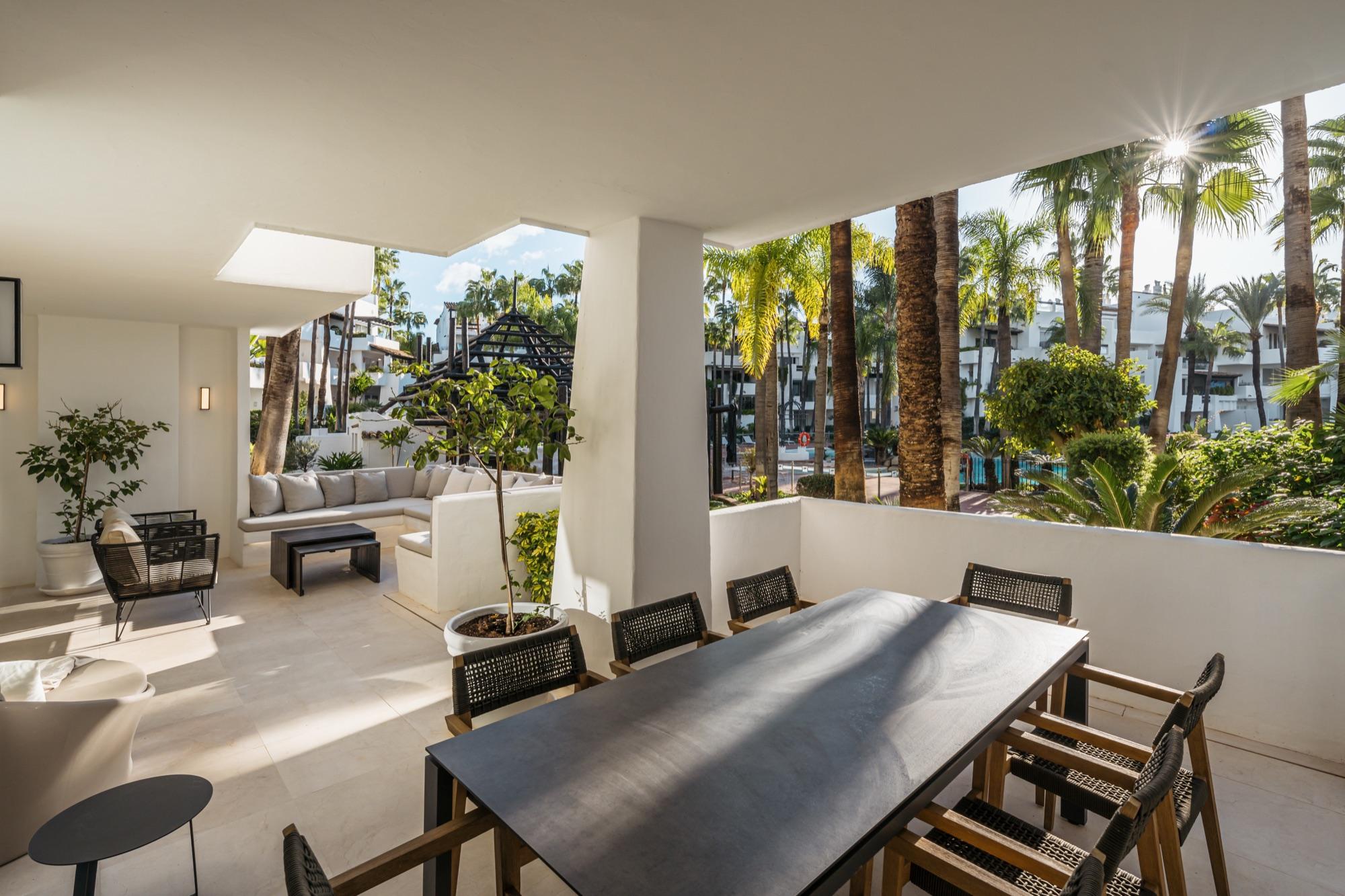
Selling a home on the Costa del Sol is, on paper, a straightforward transaction. In practice it is a paperwork exercise dressed up as a negotiation. The seller who assembles the correct document set before listing, understands how the property will be valued by the tax authorities as opposed to the market, and knows exactly what a deposit contract commits them to, holds most of the cards. The seller who improvises does not.
Most sales do not fall through over price. They stall over a missing certificate, an unpaid community bill, or a deposit contract nobody read carefully.
The document set to assemble before you list
There is a defined set of documents a Spanish notary and a prudent buyer will expect. Some are legally required for the deed to be authorised; others are required to advertise the property at all; and some simply protect you from a buyer walking away late in the process. Gather them before you accept a first viewing, not after you have accepted an offer. The two most common causes of a collapsed sale on the Costa del Sol are an unpaid community balance discovered late and an energy certificate that was never commissioned.
Nota simple: proof of what you actually own
The nota simple is an informative extract issued by the Registro de la Propiedad showing who owns the property and its legal situation: charges, mortgages, embargoes and any registered limitations. It is a nota informativa and, importantly, it is distinct from a certificacion registral, which is the only registry document that carries full legal guarantee (fe publica). For a sale, the notary requests an updated nota simple at the moment of signing to confirm the transfer can legally proceed. You should obtain one early yourself so there are no surprises: an old mortgage that was repaid but never formally cancelled at the registry, for example, will need to be cleared before completion.
IBI receipt and Catastro data
Have your most recent IBI (Impuesto sobre Bienes Inmuebles) receipt to hand. It evidences that the annual property tax is paid and, through its cadastral reference, links the property to its Catastro record. The Catastro description (surface area, boundaries, use) should be consistent with the reality on the ground and with the registry. Discrepancies between the Catastro and the Registro de la Propiedad are common in older Costa del Sol properties and are best resolved before, not during, a sale.
Community-debt certificate: the document that can stop the deed
If the property forms part of a comunidad de propietarios, Ley 49/1960 (Ley de Propiedad Horizontal), article 9.1.e), requires the seller to declare being up to date with general community expenses, or to state exactly what is owed, and to attach a certificate confirming the state of debts that matches that declaration. Without this certificate the notary cannot authorise the public deed, unless the buyer expressly exonerates the seller in writing. The certificate is issued by whoever performs the secretary function, with the president's approval (visto bueno), within a maximum of seven calendar days from your request. The secretary and president are personally liable for its accuracy and for any delay, so do not accept vague answers from an administrator.
Energy performance certificate and label
Under Real Decreto 390/2021, on the sale of an existing property the seller must give the buyer a copy of the duly registered Certificado de Eficiencia Energetica (CEE) and attach the energy label to the sale contract. The label must also appear in every offer, promotion and advertisement for the property. The certificate is valid for a maximum of ten years (less if you carry out energy-relevant works). One change to note: Real Decreto 659/2025 (published 23 July 2025 and in force twelve months later, from July 2026) alters who may issue these certificates, opening the competent-technician role to holders of vocational and professional qualifications alongside university graduates, and creating a centralised national register of competent technicians. It changes who signs the certificate, not your obligation to have one to sell.
Licence of occupation (LPO), not a cedula de habitabilidad
This is where Andalucia differs from other regions. Habitability here is accredited by the Licencia de Primera Ocupacion (LPO) for new-build, and there is no periodic renewal. The cedula de habitabilidad required in some other autonomous communities is not required in Andalucia. If you are the first owner of a new-build, the promoter should have delivered the LPO to you, and you pass it on. For a resale of an established home, the original occupation licence and evidence that the property is legally habitable form part of the diligence set a careful buyer will ask for.
Utility bills and, where relevant, the building technical report
Recent electricity and water bills confirm active supply contracts and the meter references a buyer will need to transfer service. Where you are selling within an older building, the Informe de Evaluacion del Edificio (IEE) may be relevant. Regulated originally by Ley 8/2013 de rehabilitacion, regeneracion y renovacion urbanas, the IEE assesses conservation, universal accessibility and energy efficiency and is generally valid for ten years. Its mandatory thresholds (typically buildings over a set age) are fixed per municipality, so the applicable age trigger must be checked for your specific Costa del Sol town. It also conditions access to rehabilitation grants, which can matter to a buyer planning works.
Tourist-let registration, if the property is marketed for tourism
If your property is used, or advertised, for short-term touristic letting, its registration status is part of the diligence set. Note that the position changed in 2026. The state Registro Unico de Arrendamientos and its rental registration number (NRA), created by Real Decreto 1312/2024, were annulled by the Tribunal Supremo in judgment 620/2026 of 19 May 2026 (published in the BOE on 8 June 2026), which held that the State lacked the competence to create a national register overlapping the regional tourism registers. The valid identifier in Andalucia is therefore the registration code from the Registro de Turismo de Andalucia, issued when the property is inscribed as a vivienda con fines turisticos under Decreto 28/2016. That VFT code must appear in all advertising, and a buyer intending to continue short-let use will want to see it and confirm its status.
| Document | Source / issuer | Legally required to complete? | Notes |
|---|---|---|---|
| Nota simple | Registro de la Propiedad | Requested by notary at signing | Informative; certificacion registral is the guaranteed form |
| IBI receipt | Ayuntamiento / Catastro | No, but expected | Evidences property tax paid; links to cadastral reference |
| Community-debt certificate | Community secretary + president | Yes, unless buyer waives (Ley 49/1960 art. 9.1.e) | Issued within 7 calendar days of request |
| Energy certificate (CEE) + label | Registered competent technician | Yes (RD 390/2021) | Valid max 10 years; label needed in all advertising |
| Licence of occupation (LPO) | Ayuntamiento / promoter | Expected diligence item | Andalucia uses LPO, not cedula de habitabilidad |
| Building report (IEE) | Competent technician | Depends on building age / municipality | Ley 8/2013; thresholds set locally |
| Tourist-let registration (VFT) | Registro de Turismo de Andalucia | Only for touristic-use properties | Andalucian VFT code (Decreto 28/2016); state NRA annulled by STS 620/2026 |
How homes are actually valued using official data
There are two separate questions a seller conflates at their peril: what the property is worth to a buyer, and what value the tax authorities will use. They are not the same number, and only official data answers each with any authority.
The valor de referencia: a tax floor, not a sale price
The Direccion General del Catastro publishes a valor de referencia for each property, set annually and consultable from 1 January each year on the Catastro's Sede Electronica. It is calculated from average value modules based on the prices of notarised and registered transactions by zone. Since 1 January 2022 it acts as the minimum taxable base for the buyer's transfer tax (ITP) and for inheritance and gift tax (ISD): the taxable base is the higher of the declared price or the valor de referencia. It does not cap or set your sale price, but it sets a tax floor the buyer must budget for, and if your negotiated price sits below the valor de referencia the buyer is still taxed on the higher figure. In February 2026 the Tribunal Constitucional, in STC 13/2026 of 12 February 2026, dismissed a challenge and upheld the valor de referencia as a constitutional, objective method for determining the ITP and ISD taxable base. It is now firmly settled as the tax reference, though a taxpayer may still contest the figure applied in an individual case.
The valor de referencia does not tell you what your home is worth. It tells the buyer what they will be taxed on, even if you sell for less.
Official market benchmarks
For the market question, three official sources give context that no portal asking price can match. Read them as directional benchmarks for a region, not as a valuation of your specific property, which depends on location, condition, orientation and view.
- INE's Indice de Precios de Vivienda (IPV): rebased to 2025=100 from the first quarter of 2026 with an updated model and weightings, so older 2015=100 figures are now stale. The IPV showed an annual variation of +12.9% in Q1 2026 (+9.1% new-build, +13.5% second-hand).
- Colegio de Registradores' Estadistica Registral Inmobiliaria: registered transfer volumes and a repeated-sales price index, drawn from inscriptions at the property registries.
- Consejo General del Notariado's Centro de Informacion Estadistica: notarised compraventa volumes and a real housing price series, drawn directly from deeds.
These national figures set the weather, not the temperature in your street. A defensible asking price triangulates official transaction data for comparable properties, the honest condition of the home, and the current depth of the buyer pool. On that last point, note that the abolition of the golden visa (Ley Organica 1/2025, in force 3 April 2025) removed the 500,000 EUR real-estate route to residency, which has thinned one specific segment of the non-resident buyer pool at the upper end.
The sale process and timeline
A Spanish sale runs in a predictable sequence. The value of understanding it is that each stage has a document or a deadline attached, and missing one is where cost and delay enter.
- 1Preparation: assemble the document set above; obtain your own nota simple and, if applicable, the community-debt certificate.
- 2Offer and reservation: an accepted offer is often held with a small reservation payment while contracts are drawn.
- 3Arras (deposit) contract: a private contract fixing price, deposit and a completion date, with the deposit typically 10% of the price.
- 4Escritura publica: the parties sign the public deed of sale before a notary, who requests an updated nota simple at that moment and confirms the transfer can proceed. The notary is a public official who advises both parties impartially.
- 5Registration: the deed is presented at the Registro de la Propiedad to inscribe the buyer as owner.
- 6Tax settlement: buyer and seller each meet their respective tax deadlines (below).
The taxes and their deadlines
Three tax positions matter to a seller, even where the buyer pays, because they shape the net-to-seller and the negotiation. The buyer's ITP in Andalucia is a general 7% for second-hand homes (a reduced 6% where acquired as a home and the value does not exceed 150,000 EUR, and 3.5% for certain protected profiles), payable within 30 business days of the deed, on the higher of price or valor de referencia. These reduced-rate thresholds should be confirmed against current Junta de Andalucia normativa for your circumstances. As the seller, you face two taxes of your own.
| Tax | Who pays | Basis / rate | Deadline |
|---|---|---|---|
| Plusvalia municipal (IIVTNU) | Seller (normally) | Taxpayer chooses objective method (cadastral land value x coefficient) or real method (actual land-value gain); no tax if no land-value increase | Set by ayuntamiento, typically 30 business days |
| IRPF capital gain (resident seller) | Seller | Savings-base scale: 19% to 30% (see below) | In the annual IRPF return |
| IRNR + 3% retention (non-resident seller) | Buyer withholds; seller settles | Flat 19% on the gain; buyer withholds 3% of price on account | Modelo 211 within 1 month; seller's Modelo 210 within 4 months of sale |
For a resident seller, the capital gain is taxed in the savings base (base del ahorro) on a progressive scale: 19% up to 6,000 EUR, 21% from 6,000 to 50,000, 23% from 50,000 to 200,000, 27% from 200,000 to 300,000, and 30% above 300,000. That top bracket rose from 28% to 30% on 1 January 2025 and applies to 2026 gains. Two exemptions are worth knowing: the gain on a habitual residence is fully exempt for sellers over 65, and there is a reinvestment exemption where the gain is reinvested in a new habitual residence within two years. The plusvalia municipal, restructured by Real Decreto-ley 26/2021 after Constitutional Court rulings (notably STC 182/2021), now lets the taxpayer choose the more favourable of the two methods, and no tax is due where there is no increase in land value between acquisition and transfer, which must be evidenced.
For a non-resident seller without a permanent establishment, the mechanics differ. The buyer withholds 3% of the price and pays it via Modelo 211 within one month of the sale, on account of the seller's IRNR capital gain, which is taxed at a flat 19%. The seller then files Modelo 210 to settle the real gain, with a refund available where the 3% withheld exceeds the tax due or where the sale produced a loss. Budget for the fact that 3% of the price leaves the table on completion, whatever the eventual gain.
The arras contract and its risks
The arras contract is the moment a sale becomes real, and it is the moment most sellers under-read the document. Spanish law recognises different types of arras, and the type governs what happens if either side pulls out. The contract must state which type applies. If it does not, disputes follow.
The Codigo Civil addresses arras in a single provision, article 1454: 'Si hubiesen mediado arras o senal en el contrato de compra y venta, podra rescindirse el contrato allanandose el comprador a perderlas, o el vendedor a devolverlas duplicadas.' In plain terms, this default (arras penitenciales) means a buyer who withdraws forfeits the deposit, and a seller who withdraws must return it doubled. Case law also recognises arras confirmatorias (which simply confirm the sale and do not grant a right to withdraw, so a defaulting party can be sued to complete) and arras penales (a fixed penalty). These behave very differently, so the type must be named explicitly in the contract.
Sign penitential arras and change your mind, and you return the deposit doubled. That is not a loophole. It is the price of the option you sold.
- Name the arras type explicitly. Penitenciales, confirmatorias and penales carry different consequences.
- Set a realistic completion date. The deposit is at risk if you cannot deliver clear title and the document set by that date.
- Clear any registered mortgage or charge before, not after, you sign the arras.
- Confirm the buyer's financing status. A buyer who forfeits a deposit still costs you weeks of lost market time.
- Have the arras drafted or reviewed by your own lawyer, not the buyer's side.
None of this is exotic. It is the difference between a sale that completes on the agreed date and one that drifts, loses its buyer, and returns to a market that has since moved on. The document set, the valuation view and the arras contract are the three levers a seller genuinely controls. Prepare all three before you list, and the rest of the process tends to look after itself.
Common questions
Is the community-debt certificate really compulsory to sell?
Effectively, yes. Under Ley 49/1960 article 9.1.e), the notary cannot authorise the public deed of sale unless you provide a certificate of the state of your community debts matching your declaration, or the buyer expressly exonerates you from providing it. The certificate is issued by the community secretary with the president's approval within a maximum of seven calendar days of your request.
Does the valor de referencia set the price I can sell for?
No. The valor de referencia published by the Catastro is a tax reference, not a market cap. You are free to agree any sale price. However, since 1 January 2022 the buyer's transfer tax (ITP) is calculated on the higher of the agreed price or the valor de referencia, so if you sell below it the buyer is still taxed on the higher figure. The Tribunal Constitucional confirmed this framework in STC 13/2026.
Do I need a cedula de habitabilidad in Andalucia?
No. In Andalucia habitability is accredited by the Licencia de Primera Ocupacion for new-build, and there is no periodic renewal. The cedula de habitabilidad required in some other autonomous communities does not apply here. A buyer will still expect to see the original occupation licence as part of their diligence.
What tax will I pay as the seller?
Two main taxes. Plusvalia municipal (IIVTNU) on the increase in land value, where you can choose the more favourable of two calculation methods and pay nothing if there was no land-value increase. And capital-gains tax on the profit: a resident pays on the IRPF savings-base scale from 19% up to 30% above 300,000 EUR, while a non-resident pays a flat 19% IRNR, with the buyer withholding 3% of the price on account via Modelo 211. Confirm figures for your own circumstances.
If I let my home for tourism, what registration does a buyer expect to see?
In Andalucia, the registration code from the Registro de Turismo de Andalucia (a vivienda con fines turisticos, or VFT, code under Decreto 28/2016). The state single registry and its NRA number, created by Real Decreto 1312/2024, were annulled by the Tribunal Supremo in judgment 620/2026 of 19 May 2026, so the state NRA is no longer the required identifier. A buyer intending to continue short-let use will want to see the VFT code and its status.
What happens if I pull out after signing the arras contract?
It depends on the type of arras named in the contract. Under the default penitential arras of Codigo Civil article 1454, a seller who withdraws must return the deposit doubled to the buyer. Confirmatory or penal arras behave differently and may allow the other party to force completion or claim a set penalty. Always have the contract reviewed by your own lawyer before signing.
Sources
Every figure in this guide is drawn from an official source. Rules and rates change, and your own circumstances may differ, so confirm the detail with a lawyer or the relevant authority before you act.
- Ley 49/1960, de 21 de julio, sobre propiedad horizontal, art. 9.1.e) - BOE-A-1960-10906 · BOE
The seller must provide a community-debt certificate for the deed unless the buyer waives it; issued within 7 calendar days.
View source - Real Decreto 390/2021, de 1 de junio, procedimiento basico para la certificacion de la eficiencia energetica de los edificios - BOE-A-2021-9176 · BOE
On sale the seller must provide a registered energy certificate and attach the energy label; validity max 10 years.
View source - Real Decreto 659/2025, de 22 de julio, que modifica el RD 390/2021 - BOE-A-2025-15230 · BOE
RD 659/2025 changes who may issue energy certificates and creates a centralised register of competent technicians; published 23 July 2025, in force twelve months later.
View source - Junta de Andalucia - Tramites de compraventa de viviendas · Junta de Andalucia
In Andalucia habitability is accredited by the Licencia de Primera Ocupacion; the cedula de habitabilidad is not required.
View source - Colegio de Registradores - Registro de la Propiedad · Colegio de Registradores (CORPME)
The nota simple is an informative registry extract; distinct from the certificacion registral, which carries full legal guarantee.
View source - Codigo Civil (Real Decreto de 24 de julio de 1889), art. 1454 - BOE-A-1889-4763 · BOE
Arras penitenciales: the buyer who withdraws forfeits the deposit; the seller who withdraws returns it doubled.
View source - Direccion General del Catastro - Sede Electronica, Valor de referencia (base minima per Ley 11/2021) · Direccion General del Catastro
The valor de referencia is set annually and acts as the minimum ITP/ISD taxable base (higher of price or valor de referencia).
View source - Tribunal Constitucional, Sentencia 13/2026, de 12 de febrero de 2026 · Tribunal Constitucional / BOE
The Tribunal Constitucional upheld the constitutionality of the valor de referencia as the ITP/ISD taxable base.
View source - INE - Indice de Precios de Vivienda (IPV), Base 2025, Primer trimestre 2026 · INE
IPV Q1 2026 annual variation +12.9% (+9.1% new, +13.5% second-hand); rebased to 2025=100 with updated methodology.
View source - Colegio de Registradores - Estadistica Registral Inmobiliaria · Colegio de Registradores (CORPME)
Registered residential transfer volumes and a repeated-sales price index are published in the Estadistica Registral Inmobiliaria.
View source - Consejo General del Notariado - Centro de Informacion Estadistica · Consejo General del Notariado
The Notariado publishes official compraventa volumes and a real housing price series, drawn from deeds.
View source - Junta de Andalucia - Impuesto sobre Transmisiones Patrimoniales y Actos Juridicos Documentados (tributos cedidos) · Junta de Andalucia
Andalucia ITP general rate 7% (6% up to 150,000 EUR as a home; 3.5% protected profiles); base is higher of price or valor de referencia; filing within 30 business days.
View source - Real Decreto-ley 26/2021, de 8 de noviembre (adapta el TRLHL - IIVTNU) - BOE-A-2021-18276 · BOE
Plusvalia municipal: two calculation methods, taxpayer chooses; no tax where there is no land-value increase (adapting the TRLHL after STC 182/2021).
View source - AEAT - No residentes: ganancia patrimonial derivada de la transmision de inmuebles (Modelo 211 y 210, IRNR) · AEAT
Non-resident seller: buyer withholds 3% via Modelo 211 within 1 month; seller files Modelo 210; flat 19% IRNR gain.
View source - AEAT - Manual practico IRPF 2025, gravamen de la base liquidable del ahorro · AEAT
Resident capital-gains savings-base scale 19% to 30%; top bracket rose from 28% to 30% from 1 Jan 2025; over-65 and reinvestment exemptions.
View source - Ley 8/2013, de 26 de junio, de rehabilitacion, regeneracion y renovacion urbanas - BOE-A-2013-6938 · BOE
The Informe de Evaluacion del Edificio assesses conservation, accessibility and energy efficiency; thresholds set locally.
View source - Ley Organica 1/2025, de 2 de enero, de medidas en materia de eficiencia del Servicio Publico de Justicia - BOE-A-2025-76 · BOE
The golden visa (500,000 EUR real-estate residency route) was abolished, repealing the investor-residence provisions of Ley 14/2013; in force 3 April 2025.
View source - Tribunal Supremo (Sala Tercera), Sentencia 620/2026, de 19 de mayo de 2026 - BOE-A-2026-12300 · Tribunal Supremo / BOE
The Tribunal Supremo annulled the state Registro Unico de Arrendamientos procedure (NRA/NRUA) of RD 1312/2024 for lack of state competence.
View source - Decreto 28/2016, de 2 de febrero, de las viviendas con fines turisticos - BOJA num. 28 · Junta de Andalucia
In Andalucia touristic-use homes must be inscribed in the Registro de Turismo de Andalucia; the VFT code must appear in all advertising.
View source