Blog/Design
5 June 2026 · 6 min read
How to Tell a Well-Built Marbella Villa From a Badly Built One
The Costa del Sol look is easy to photograph and hard to read. This is the checklist an architect runs on a first viewing, from cracks and damp to the glazing, the memoria de calidades and what a survey will and will not catch. It will not replace a proper inspection, but it will tell you whether a property is worth one.

Carlos
Architect and Founder, DIEZ

Structure and cracks: what the building is doing
Every building moves a little as it settles. The question is whether it has stopped. Spanish builders draw a useful distinction between a fisura, a fine surface crack, and a grieta, a wider crack that can point to real movement. Hairline cracks in plaster are common and usually cosmetic. The ones worth asking about are wider than a couple of millimetres as a rough guide, run diagonally from the corners of doors and windows, step through the joints of blockwork, or pass straight through a structural wall. Ask when they appeared and whether anyone has kept an eye on them since.
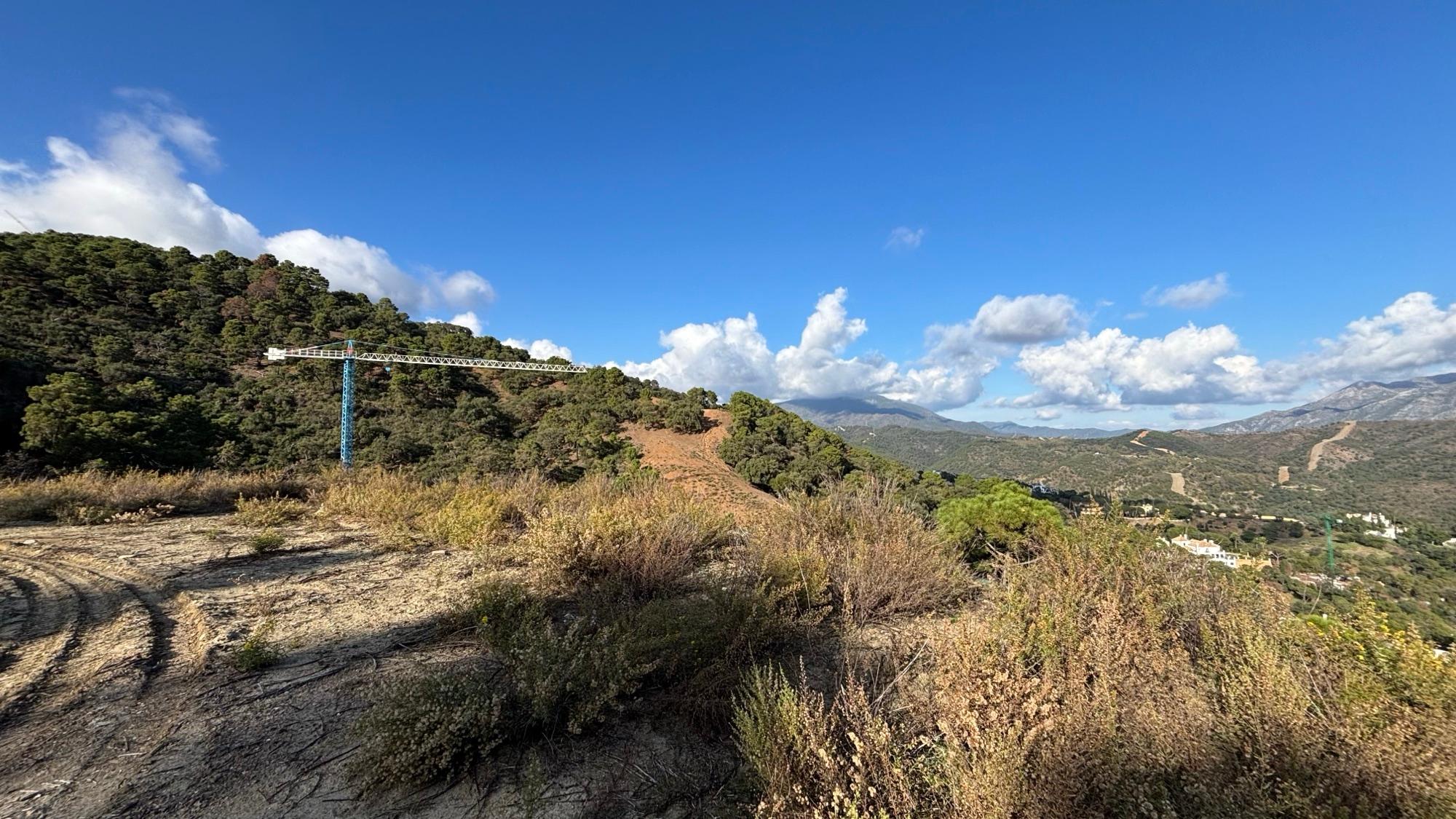
Much of Marbella's better land sits on a slope. Sierra Blanca, Nagueles, Cascada de Camojan, El Madronal and La Zagaleta are all on the hillside, and the villa is often held in place by retaining walls that hold back the ground behind and below it. Those walls matter as much as the house. Look for walls that lean, bulge, crack in a stepped line, or weep water and white salt through the face. A retaining wall that is failing is one of the most expensive things on a property to put right, and it is easy to walk straight past.
Modern villas here lean hard on cantilevers and long flat spans: terraces that reach out with nothing beneath them, thin roof edges, very wide openings. These are fine when they are properly engineered and a steady source of cracks and sag when they are not.
- Diagonal cracks running from window and door corners, or cracks you could fit a coin edge into
- Stepped cracks that follow the mortar joints in block or brick walls
- Retaining walls that lean, bulge, or show damp and salt bloom on the face
- Doors and windows that no longer close square within their frames
- A single fresh patch of paint or plaster, which can quietly cover recent movement
Water is the main enemy
If one thing separates a well-built Costa del Sol villa from a poor one, it is how it handles water, and the climate makes this deceptive. Summers are long and dry, so a roof can look perfect at a July viewing and leak in the first serious autumn rain. The region gets sudden, heavy downpours in autumn, the kind locally associated with a gota fria or DANA. Where you can, try to see a property after rain, or at least read the marks that rain leaves behind.
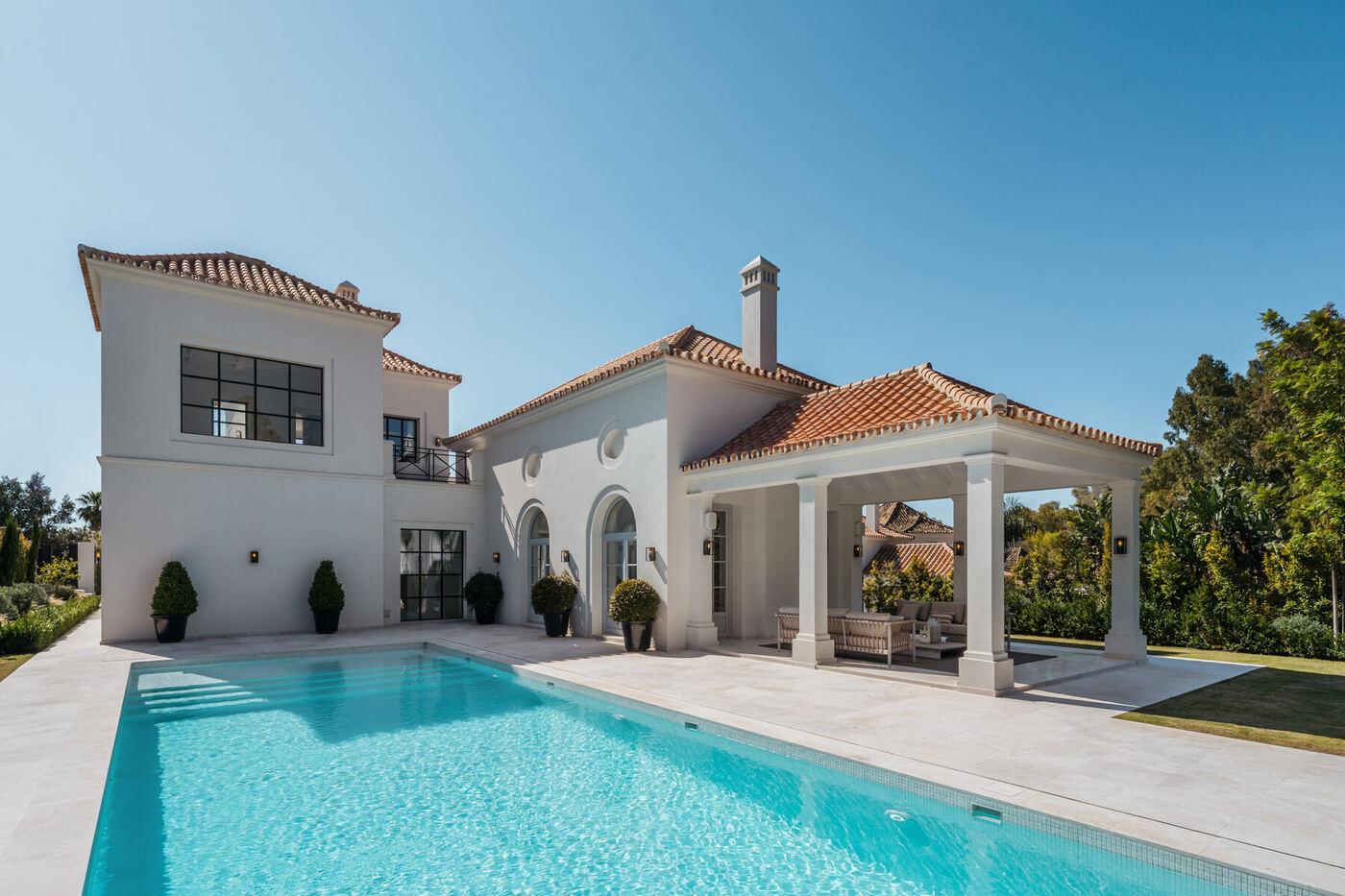
Flat roofs are the Marbella signature, and they depend entirely on two things: a sound waterproof layer and correct falls, the gentle slopes that carry water to the drains. You cannot see the membrane, but you can see its failures on the ceiling below, as stains, blistered paint or a tide line in a top-floor corner. Terraces sitting over living rooms are the same story and a very common point of failure.
Then there is the hillside. Many villas dig a floor or two into the slope for garages, cinema rooms, gyms and spas. Below-ground rooms are the highest damp risk in the house. Trust your nose. A musty smell, a white salt bloom (salitre) creeping up a wall, paint that is fresh only along the bottom of the walls, or a dehumidifier quietly running in a corner all say the same thing.
A roof that looks perfect in July can leak in October. Water gets in from above and from the hillside behind, and both stay hidden until they don't.
- Ceiling stains or tide lines in top-floor corners and beneath roof terraces
- Musty smell and salt bloom in basements, garages and lower-ground rooms
- Dehumidifiers left running, or fresh paint only on the lower part of a wall
- Standing water or debris on flat roofs and terraces, a sign of poor falls
- Damp or mould where an external wall meets the floor or ceiling
Glass, sun, sound and comfort
The modern Marbella villa is mostly glass, with wide sliding systems opening onto the terrace and the view. Glass is where comfort and running costs are won or lost, and it comes down to two questions: is the glazing insulating properly, and is the sun being controlled.
Orientation is the first thing to check against reality rather than the brochure. South and west-facing glass with no shading turns a room into a greenhouse on a summer afternoon, and the low western light here is strong. Good design controls the sun before it reaches the glass, with roof overhangs, deep window reveals, pergolas, external blinds or fixed brise soleil. Internal blinds and curtains do not solve this. By the time the light reaches them, the heat is already inside. Look up and see whether anything actually shades the big openings.
On the glass itself, look for double glazing and aluminium frames with a thermal break, in Spanish a rotura de puente termico. Single glazing, or slim aluminium frames with no thermal break, point to an older or cheaper build and to condensation and cold in winter. The same weakness, a thermal bridge, shows up where concrete slabs and balconies pass through the wall, often as a faint damp line or mould at the edge of a ceiling.
Sound is the quiet one, and the one people regret. Stand next to the pool machinery, the air-conditioning condensers and the aerothermal or heat-pump unit, and listen. These run through summer nights. In Nueva Andalucia and in the semi-detached and terraced parts of town, also consider how close the neighbours are, and how much carries through a party wall and off hard stone floors.
The spec sheet, the render and the survey
Off-plan is sold with two documents, and buyers tend to read the wrong one. The render sells the light and the lifestyle. The memoria de calidades, the specification, is the one that comes closest to a contract for what you will actually receive. Read it slowly. Note where it names a real brand and model, and where it says 'or similar quality', because that phrase is what lets a developer substitute a cheaper equivalent later. Go through the glazing, the insulation, the climate system, the kitchen and the sanitaryware line by line.
Renders are honest about the view and quiet about everything else. They tend to show flattering low sun, an empty plot and no neighbours. Check the real orientation, the plot boundaries and, above all, what is allowed to be built on the plots around and below you. A clear view today is not always a clear view in three years.
For any purchase, confirm the paperwork that proves the building is what it claims to be: the Licencia de Primera Ocupacion, the first-occupation licence, which confirms the finished building matches the licensed project and is legal to live in, and the nota simple for its legal status. Missing or incomplete occupation paperwork is a reason to slow down, not speed up.
Spain has no strong tradition of the buyer's survey the way the UK does, but you can and often should commission one. The person to ask is an arquitecto tecnico, sometimes called an aparejador, a qualified building surveyor. Be clear-eyed about what it gets you. A survey catches visible cracks, moisture readings, damp, obvious defects, the state of roofs and terraces where they can be reached, and whether the finishes match the memoria. It does not see what is buried behind the walls and under the floors, it does not test the concrete unless that is specifically commissioned, and it cannot show you how the building behaves in heavy rain if it is inspected in a dry spell. A survey lowers the risk. It does not remove it.
The render sells the light. The memoria de calidades is closer to the contract. Read the second one slowly.
Common questions
Do I really need a survey to buy a villa in Spain?
It is not legally required, and Spain has no strong survey culture, so many buyers skip it. On anything other than a brand-new home with full guarantees, and often even then, that is a false economy. Hiring an arquitecto tecnico to inspect before you commit is inexpensive next to the price of the house. Just hold realistic expectations: a survey catches what is visible and measurable, not what is sealed inside the structure, and not what only reveals itself in heavy rain if the visit happens in dry weather.
How do I make sure a finished off-plan villa matches what I was shown?
Treat the memoria de calidades as the real promise and the render as marketing. Before you sign, get the specification as detailed as possible and question every 'or similar' clause. Keep some payment leverage until the final handover, carry out a proper snagging visit, and confirm the Licencia de Primera Ocupacion is in place before completion. If a developer is willing to name exact brands and models in writing, that willingness is a good sign in itself.
Are some Marbella areas riskier for build quality than others?
It is less about the postcode and more about the plot. The steep, sought-after hillsides, Sierra Blanca, Nagueles, El Madronal and La Zagaleta, put the emphasis on retaining walls, drainage and how the basement was waterproofed. Closer to the beach, in parts of the Golden Mile and Guadalmina, salt air and humidity make damp and metal corrosion the things to watch. Careful and careless builds sit side by side in all of them.
Can someone read a property this way before I pay for a full survey?
Yes, and that is the stage where it helps most. DIEZ was founded by an architect, and reading a building for these signs at the viewing, before you commission a formal inspection, is exactly the technical eye we bring to it. DIEZ is free for buyers, so an early, honest read on whether a villa is worth pursuing costs you nothing.
Related